Cart
Cart|
Home > Online Product Documentation > Table of Contents > Overview OverviewStylus Studio's Convert to XML module is an adapter you use to build converters that convert non-XML files to XML documents. Convert to XML consists of
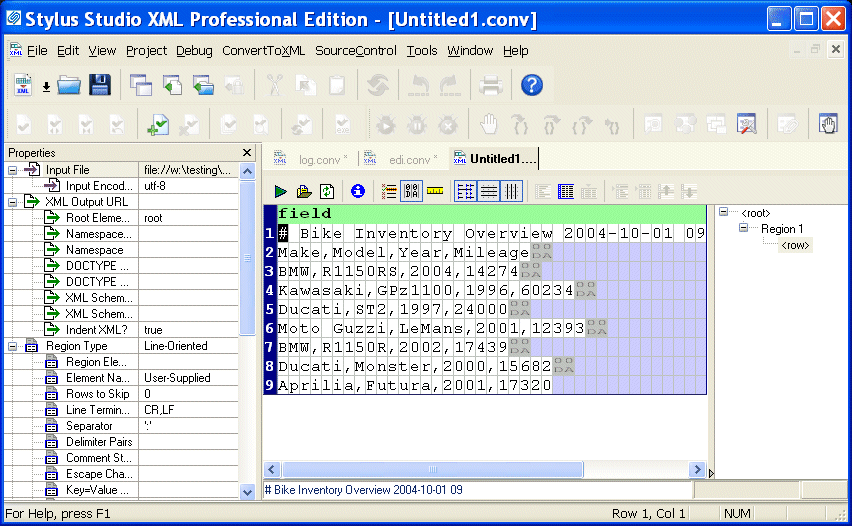
File SupportStylus Studio's Convert to XML makes it easy to build converters for many non-XML file types, including text, binary, and EDI. You can let Stylus Studio use a set of rules to determine the type, encoding, layout of the input file, or you can specify these settings manually, as shown in Figure 149. Stylus Studio's heuristics are also used to determine the field separator character being used (if any), the delimiting character being used (if any), and so on. Using Convert to XMLGenerally speaking, you use Convert to XML to create a converter, and then you use that converter to convert one or more non-XML files to XML. The process of using Convert to XML involves the following steps:
1. Create the converter:
a. Select
File > New > Convert to XML from the Stylus Studio menu to display the
New Converter dialog box.
b. Select the file you want to convert to XML and open it in the Convert to XML Editor.
c. Review the default converter configuration settings displayed in the Convert to XML Editor, and modify as required.
d. Run the adapter and review the conversion results displayed in the
Preview window.
e. Save the converter (and, optionally, the XML output for the input file selected in
step b).
2. Use the converter to open a new non-XML file of the same type as the file you used to define the converter.
The Convert to XML adapter engine converts the new file to an XML document, displaying it in the Stylus Studio editor you specify when opening the file. The steps in this process are described in greater detail in the following sections. Other Ways to Convert Files to XMLIn addition to creating your own converter, you can convert files to XML
|

XML PRODUCTIVITY THROUGH INNOVATION ™