Cart
Cart
|
Home > Online Product Documentation > Table of Contents > Creating XML Schema from EDIFACT Messages Creating XML Schema from EDIFACT Messages
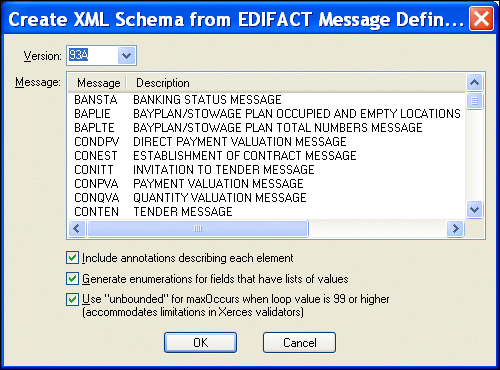
Stylus Studio XML Enterprise Suite provides a document wizard that allows you to create XML Schema based on an EDIFACT message, such as the Business Credit Report (BUSCRD) message type. Setting Wizard OptionsIn addition to selecting a specific EDIFACT version and message type, Stylus Studio provides the following settings that determine how the XML Schema is generated. You can decide whether or not you want to Running the EDIFACT to XML Schema Documentation WizardTo run the EDIFACT to XML Schema documentation wizard:
1. Select
File > Documentation Wizards from the Stylus Studio menu.
The Documentation Wizards dialog box appears.
2. Double-click the
EDIFACT to XML Schema icon.
The Create XML Schema from EDIFACT Message Definition dialog box appears.
3. If necessary, change the UN/CEFACT version ID. Versions are listed chronologically in ascending order.
4. Change the XML Schema creation options as required. See
Setting Wizard Options if you need help with this step.
5. Click OK.
Stylus Studio converts the EDIFACT message you selected in step 3 to XML Schema and opens a new, untitled document in the XML Schema Editor. |

XML PRODUCTIVITY THROUGH INNOVATION ™