Overview of the XSLT Mapper

The XSLT mapper helps you compose XSLT that aggregates data from one or more source documents, regardless of their origin or XML. For example, an inventory application might use information from multiple vendors, each of whom organizes invoices in a different way. You can use the XSLT mapper to identify source documents, map the relevant nodes from each to a target document, and in doing that define any required XSLT instructions, XPath or Java functions, and logical operators graphically.

To use the XSLT mapper to create an XSLT stylesheet, you start by specifying one or more source documents and one target document.

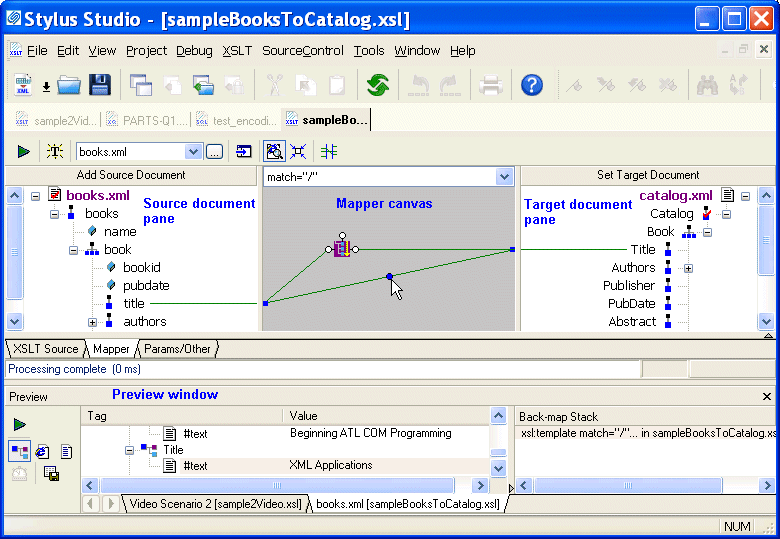
Figure 218. Example of XSLT Mapper

The Mapper tab consists of these areas:

  • Source document pane, in which you add one or more source documents.
  • Target structure pane, in which you specify the structure of the result you want the XSLT to return.
  • Mapper canvas, on which you can define conditions, functions, and operations for source document nodes to filter return values that are then mapped to the target node.
  • Source code pane (not shown in Figure 218). The source code pane allows you to view the source code while using the mapper. This is a great way to see how changes to the mapper affect the source, without the need to switch to the XSLT Source tab. Of course, the XSLT Source tab is available if you prefer working with the source using a full-page view. All views - Mapper tab, XSLT Source tab, and the source pane - are synchronized. When displayed, the source pane spans the width of the XSLT editor.

As you link elements and define XSLT instruction and function blocks in the mapper, Stylus Studio composes XSLT for you, which is visible (and editable) any time you click the XSLT editor's XSLT Source tab. When you have finished mapping, you can apply the stylesheet to XML documents that have the same schema as the source document. The result document also has the same schema as the destination document.

As with the XSLT Source tab, you can preview XSLT results from the Mapper tab by clicking the Preview Result button ( ). Debugging, however, can be performed from the XSLT Source tab only.

This section covers the following topics:

XSL-List Blog

XSL-List is a discussion forum on the Extensible Stylesheet Language (XSL), covering the XSL specification, XSL processors, tools, user questions, trends and more. Bookmark this RSS or ATOM feed now!

Visual Data Integration Using Stylus Studio XML Pipeline

XML Pipeline is a visual data integration tool for designing, editing, debugging and deploying XML applications. This tutorial covers building a data integration application that aggregates CSV and EDI data and publishes a report to HTML and PDF.

Apache FOP

Apache FOP is an open-source engine is available from the Apache project that renders XSL-FO into PDF and other popular document formats. Apache FOP is fully integrated with Stylus Studio's XSL:FO tools.

Stylus Studio Lends a Helping Hand to the New Orleans Reconstruction Efforts

Read how Stylus Studio is helping with the on-going hurricane Katrina reconstruction efforts in New Orleans.

Stylus Most Wanted

 
Free Stylus Studio XML Training:
W3C Member