Views in the XML Schema Editor

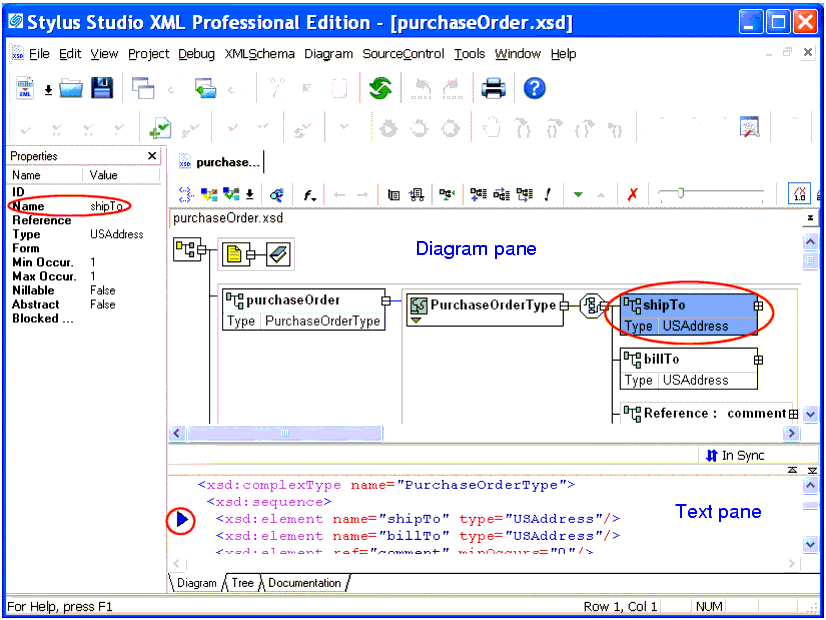
The XML Schema Editor has Diagram, Tree, and Documentation tabs. The Diagram tab, which is the default for the XML Schema Editor, is shown in Figure 267.

Figure 267. XML Schema Editor Diagram Tab


Watch it! You can view a video demonstration of this feature by clicking the television icon or by clicking this link: watch the XML Schema Diagram Editor video.

You can see other Stylus Studio video demonstrations here: http://www.stylusstudio.com/xml_videos.html.

Each tab displays the schema from a unique perspective, as summarized here:

  • Diagram - Displays the XML Schema using graphical elements for the nodes (elements, attributes, simpleTypes, complexTypes, and so on) defined in the XML Schema in a diagram pane. Container elements can be expanded to show child elements, and values such as element and attribute names and types can be edited in place by double-clicking the node you want to modify.

In addition to the diagram pane, the Diagram tab includes a text pane. The text pane displays the raw XML text used to define the XML Schema, and lets you see how the changes you make in the diagram affect the XML Schema text. You can make changes in either pane - to a node in the diagram, or directly to the text - Stylus Studio keeps both views synchronized.

The Diagram tab has a full complement of editing tools, including checkers for well-formedness and validation, as well as a query functionality that lets you evaluate your query using either XPath 1.0 or XPath 2.0. XML Schema query is also supported in the Tree tab. See Printing to learn how to print information in the Diagram tab.

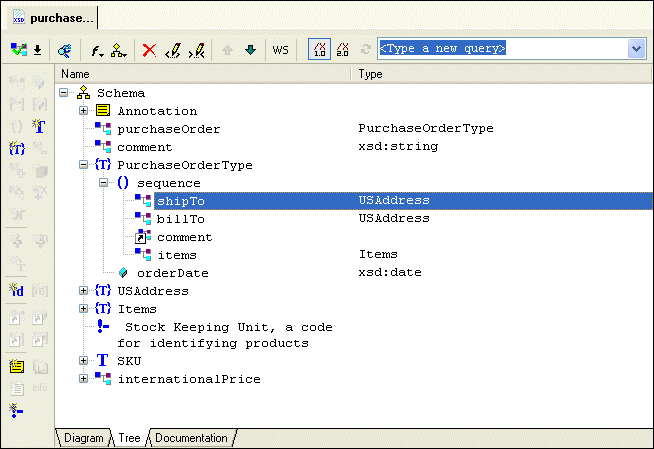
  • Tree - Displays a DOM tree representation of the XML Schema. You can edit the XML Schema graphically, in the tree itself, or by modifying the properties of the nodes you select.

Figure 268. XML Schema Editor Tree Tab

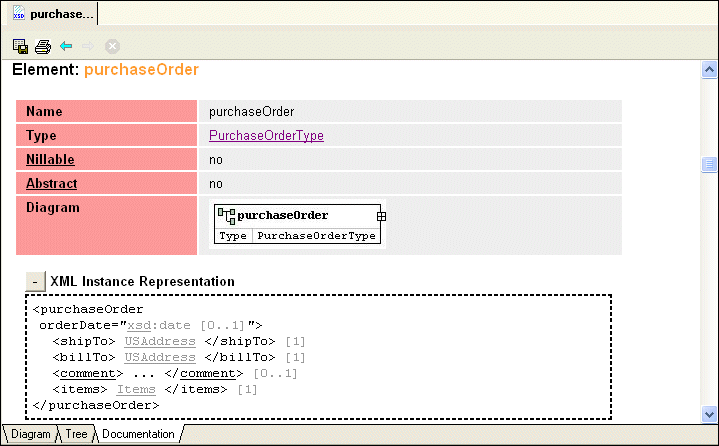
  • Documentation - Displays read-only summary and detailed reference information about the XML Schema, including sections for schema document properties, global declarations, and global definitions.

Figure 269. XML Schema Editor Documentation Tab (XS3P Format)

In Stylus Studio, the information in all tabs synchronized automatically.

Generally speaking, if you are just getting started with XML Schema you should consider using the Diagram tab to work with XML Schema in Stylus Studio. Its graphical user interface makes defining XML Schema easy and error-free, and the built-in text pane, which lets you see how new nodes are rendered in XML, can be a useful learning tool.

To get started using the Diagram view to define an XML Schema, see Defining an XML Schema Using the Diagram Tab - Getting Started. Procedures for working with the Diagram tab are also covered throughout this chapter.

Single Source Publishing

Single source publishing is the ability to use one source of information for generating multiple types of output. Stylus Studio XML Publishing enables Single Source Publishing - publish PDF or HTML documents from Relational, XML or Legacy files.

Mail, Package & Freight Delivery

Want to know what mail, package & freight delivery companies are shipping away there XML woes? Now you can! Check out these top mail, package & freight delivery companies that are packaged with the power of Stylus Studio.

The XML Primer: Editing and Validating XML in Stylus Studio

The XML primer demonstrates editing and validating XML in Stylus Studio demonstrates XML editing tools and utilities to simplify working with XML documents. Learn how to automate XML editing operations and troubleshoot XML documents today!

HTML Tidy

HTML Tidy is a program for turning HTML into something that can be parsed as XML, unlocking their data for use in XSLT and XQuery programs. Learn how to use HTML Tidy in Stylus Studio now.

Stylus Most Wanted

 
Free Stylus Studio XML Training:
W3C Member