|
Home > Online Product Documentation > Table of Contents > Generate the Code Generate the CodeOnce the report is finished, we can generate XSLT or XQuery code to produce a report in HTML+CSS or XSL-FO formats.
30. Click the
Generate button on the toolbar.
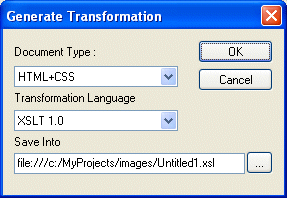
Stylus Studio displays the Generate Transformation dialog box.
We want to use XSLT to generate our report in HTML+CSS, so we do not need to change the values for Document Type or Transformation Language.
31. The default name for the
.xsl file is based on the
.report file name. We change
Untitled1.xsl to
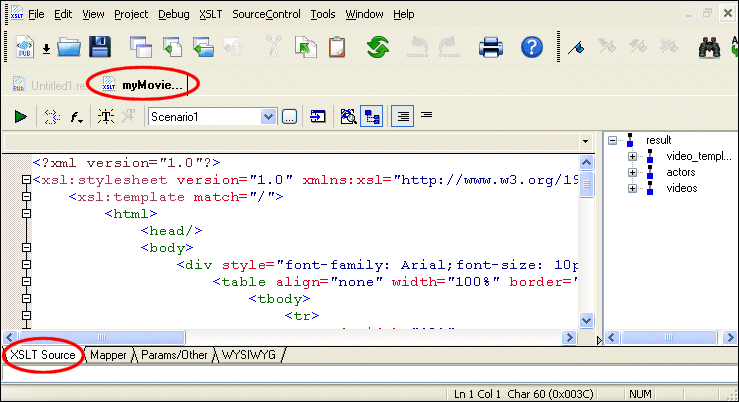
myMovieRatings.xsl and click
OK.
Stylus Studio opens the generated XSLT in the XSLT Editor, as shown in Figure 490.
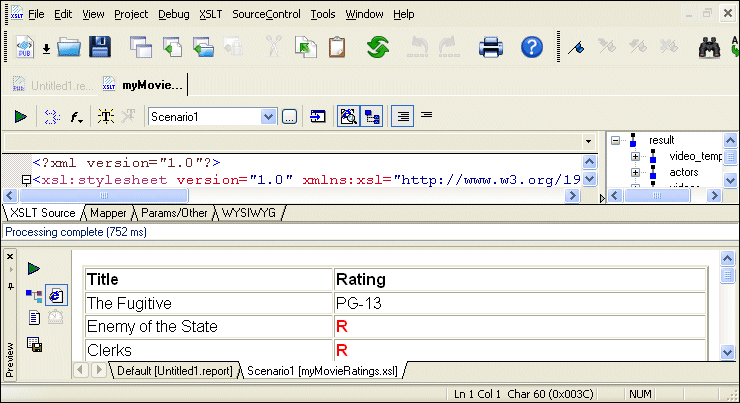
32. If we preview the XSLT, we see the same results as when we previewed the report in XML Publisher.
|

XML Spell Checker
The Stylus Studio Spell Checker is integrated with our intuitive XML Text Editor. It highlights typographical errors as you type and lets you easily search, replace, and build custom dictionaries.
XML Project
Stylus Studio's Project Window is an intuitive, visual feature for organizing files belonging to a project. It supports different file-type icons and nested folders; many helpful options are available from the context menu.
Varying Record Layout to XML
Not every row in a text file has to have the same layout. Convert to XML has advanced pattern-recognition tools to route the data to where it belongs.
Configuring the Java Runtime Engine or Java Development Kit
This page identifies the Stylus Studio modules that require Java runtime and Java compiler components, where you can download these Java components, and how to force Stylus Studio to detect new or changed Java components.