Sources

As described in Working with Data Sources, if you plan on generating XSLT for your XML Publisher report you must have specified at least one default source. (Sources are not required for generating XQuery, though it is considered good practice to specify one.)

Additional Sources

You can specify multiple sources for an XML Publisher report. The first source is specified in the XSLT/XQuery Scenario Properties dialog box as shown in the following table.

Language Type
Scenario Property
Referenced in Generated Code As
XSLT
Source XML URL
A global parameter:
xsl:param name="input1"
XQuery
Main Input
An external variable:
declare variable $input1 as document-node() external
Table 131. How Additional Source Documents Are Referenced

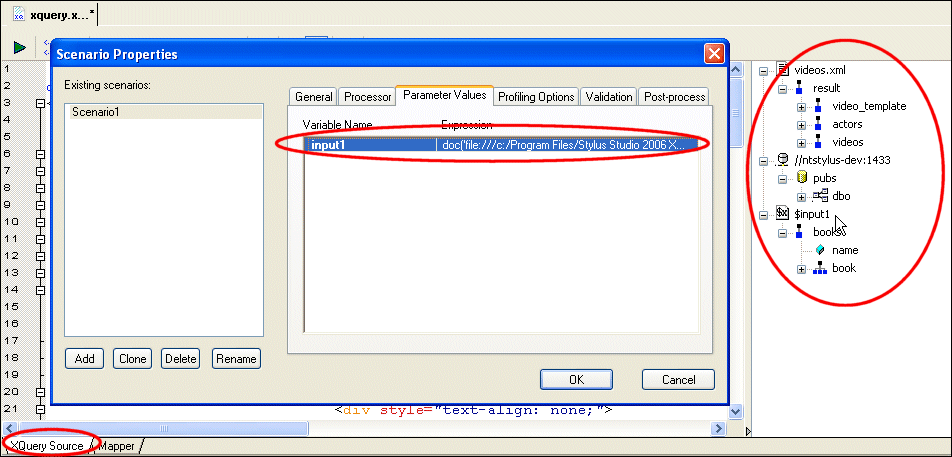
The expression associated with these variable names is displayed on the Parameter Values page of the Scenario Properties dialog box, like the one shown for XQuery scenarios in Figure 482.

Figure 482. Additional Sources Displayed on XQuery (XSLT) Scenario Properties

As you can also see, Figure 482 shows how data sources specified in XML Publisher are represented in the XQuery (and XSLT) editor. This XQuery uses three XML sources:

  • videos.xml (it is the default source)
  • A relational source from the pubs data base
  • A local copy of books.xml, displayed on the XQuery data sources panel using the variable name, $input1, with which it is associated

More About Relational Sources

Relational sources, like the one shown in Figure 482, are referenced in different ways by XSLT and XQuery:

  • XSLT code references relational data sources using the built-in Stylus Studio adapter within a document() function:

document('xquery:///jdbc:xquery:sqlserver://ntstylus-dev:1433;table=companies;user=sa;xmlforest=true;schema=dbo;DatabaseName=pubs;urltype=.xml')"

  • XQuery code references relational data sources using the collection() function:

collection('pubs.dbo.companies')/companies/ticker

See Working with the XQuery collection() Function for more information.

XML Parser

An XML Parser is a parser that is designed to read XML and create a way for programs to use XML. Learn about Stylus Studio's comprehensive support for all of the world's leading XML Parsers.

XML Schema Tutorial

An XML Schema Tutorial that explores real-world XML Schema development issues, XML Schema examples and various use cases.

Accessing Relational Databases as XML with Stylus Studio's File Explorer

This demonstration is the first part of our series on working with relational and XML data, covering how to use Stylus Studio's File Explorer to connect to and query relational database tables as XML.

XSL-List

The XSL-List forum is a valuable learning resource for the Extensible Stylesheet Language (XSL), covering the XSL specification, XSL processor implementations, and XSL user questions. Get this free XSL resource delivered to your inbox today.

Stylus Most Wanted

 
Free Stylus Studio XML Training:
W3C Member