Home >
Online Product Documentation >
Table of Contents >
Overview of Convert to XML
Overview of Convert to XML
The Convert to XML module consists of
- An
adapter engine that processes non-XML source files using the adapter configuration file (
.conv) you specify. The adapter engine is called silently any time you open a file using a Convert to XML adapter. You can also run the adapter engine manually to test the results of the adapters you create, but it has no user-visible or configurable components.
- An
editor that lets you configure the instructions in the
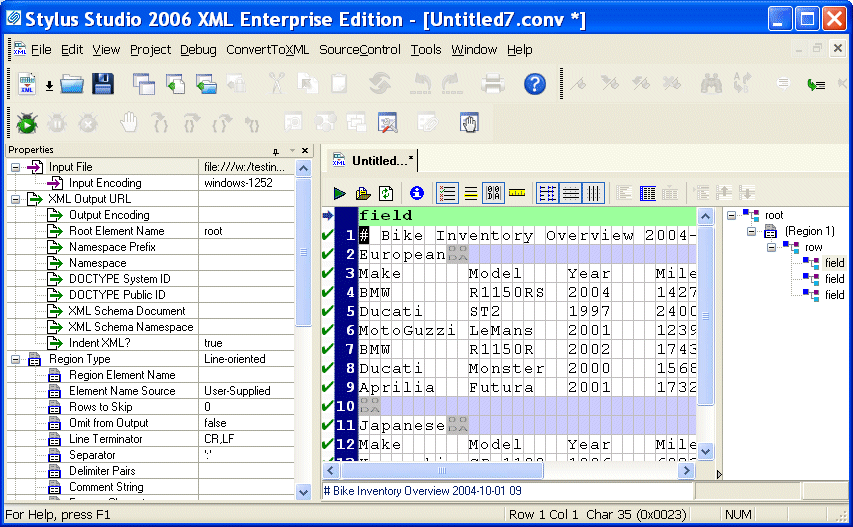
.conv file used by the adapter engine to convert non-XML files to XML. The Convert to XML Editor, shown in
Figure 160, displays information read from the input file you are using as a model to build your adapter, as well as values you want the adapter engine to use when converting other files of this type to XML. The Convert to XML Editor is displayed automatically when you create a new adapter or open an existing one.
|
|
Figure 160. Convert to XML Editor
 Cart
Cart