
Table of contentsAppendices |
3 Built-in datatypesBuilt-in datatypes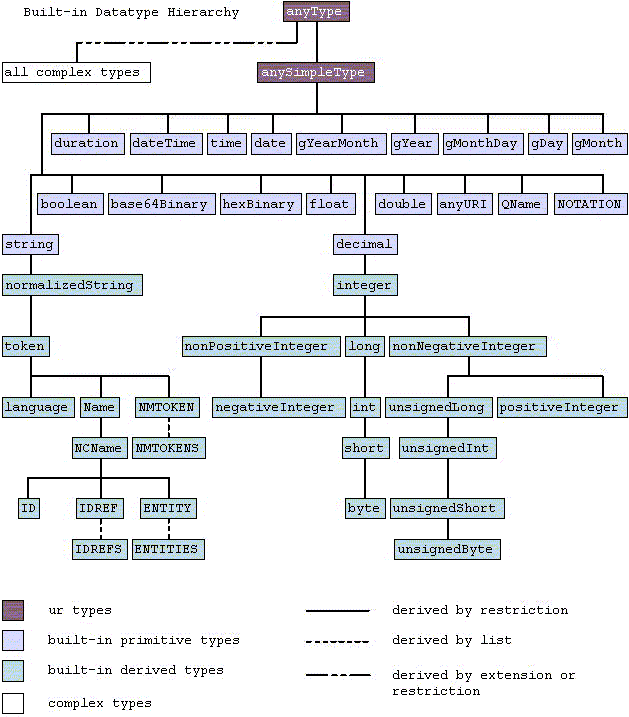
Each built-in datatype in this specification (both primitive and derived) can be uniquely addressed via a URI Reference constructed as follows:
For example, to address the [int] datatype, the URI is:
Additionally, each facet definition element can be uniquely addressed via a URI constructed as follows:
For example, to address the maxInclusive facet, the URI is:
Additionally, each facet usage in a built-in datatype definition can be uniquely addressed via a URI constructed as follows:
For example, to address the usage of the maxInclusive facet in the definition of int, the URI is:
|