Cart
Cart|
|
Home > Online Product Documentation > Table of Contents > Custom File Systems Custom File SystemsA file system is view that represents information as a series of files in at least one folder or directory. An individual file within that file system - such as an XML document, an XQuery program, or a DTD - can contain any text or binary information.
A
custom
file system is a way to extend the file/folder metaphor beyond traditional disk-based files (accessed with the
These file systems are referred to as "custom" because, although some are packaged with Stylus Studio, you can create your own. For example, you could create an LDAP custom file system to query an LDAP directory as if it were a file system. There is a Java API that allows you to access the custom file interface in Stylus Studio.
Creating a Custom File SystemThe process of creating a custom file system in Stylus Studio involves two main steps:
1. Use the Stylus Studio File System Java API, create the Java wrapper class for your data source. See
File System Interfaces for more information on this step.
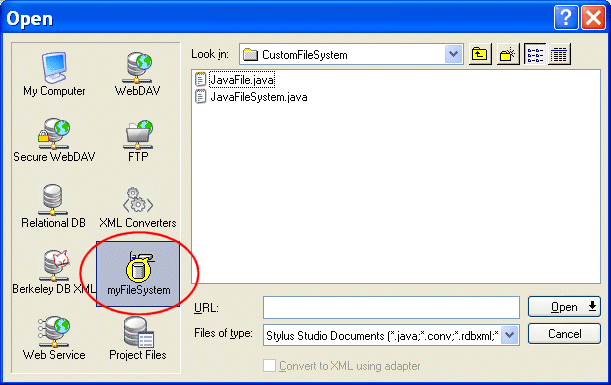
2. Register the finished custom file system with Stylus Studio, to make it available through the Stylus Studio
Open,
Save, and
Save As dialog boxes, as shown in
Figure 393. See
Registering a Custom File System for more information on this step.
|

XML PRODUCTIVITY THROUGH INNOVATION ™